Meal Prep for Beginners: The Simple System I Wish I’d Started Years Ago
Meal prep for beginners sounds intimidating — like something only fitness influencers with color-coded containers do — but I promise you it’s just cooking once so you can eat well all week. I resisted it for years because I thought it meant eating the same dry chicken and broccoli five days in a row. Then one month I added up my takeout spending and realized I’d spent more on delivery fees than on my car insurance. That number snapped me out of it.
Three years later, I spend about two hours every Sunday cooking, and I eat home-cooked lunches and dinners all week. No sad desk salads. No 9 p.m. “what’s for dinner” panic. No food rotting in the back of the fridge. This is the exact system I use — built for real beginners, no fancy equipment, no culinary degree required.
Table of Contents
What Meal Prep Actually Is (and What It Isn’t)
Let’s clear this up first, because the internet has made meal prep sound like a competitive sport.
Meal prep is simply this: you do some of your cooking ahead of time so that eating during the week takes minutes instead of an hour. That’s it. It is NOT: eating identical meals five days straight (unless you want to), spending your entire Sunday in the kitchen, buying matching glass containers in three sizes, or following a strict diet or counting every calorie.
There are three levels, and you get to pick yours. Full meal prep means cooking complete meals and portioning them out — the classic “five containers of lunch.” Ingredient prep means cooking components — a tray of roasted vegetables, a pot of rice, some shredded chicken — and assembling different meals through the week. Batch cooking means making double of whatever you’re already cooking and freezing half.
I started with ingredient prep because it gave me variety without extra work, and honestly, I still mostly do that. If the idea of eating the same lunch Monday through Friday makes you want to cry, ingredient prep is your answer.
Why I Finally Started (The Takeout Receipt Story)
I’d love to say I started meal prepping for my health, but the truth is less noble: money. One January, I was doing that depressing annual budget review and discovered I’d spent over $4,000 on takeout the previous year. Four thousand dollars. On food that arrived lukewarm in plastic containers.
The health part followed naturally. When you’re cooking your own food, you automatically know what’s in it — no mystery oils, no hidden sugar bombs, no “serves one” that’s actually 1,400 calories. My energy in the afternoons improved within two weeks, not because I was eating some magic superfood, but because I stopped eating a giant burrito at my desk every day.
And the time thing surprised me most. Yes, Sunday costs me two hours. But I was spending 30-45 minutes every single weeknight deciding what to eat, cooking or ordering, and cleaning up. Meal prep doesn’t cost time. It buys it back.
The 20-Minute Planning Step Most Beginners Skip
Here’s where almost everyone goes wrong: they skip straight to cooking. Then Wednesday arrives and they’ve got six containers of something nobody wants to eat.
Every Sunday morning, before I touch a pan, I spend 20 minutes with a coffee and a notebook. Three questions: What do I actually feel like eating this week? What’s already in my fridge and pantry? What’s my week actually like — late meetings mean I need dinners that reheat in three minutes.
Then I write a loose menu and make ONE grocery list from it. One trip. Pro tip I learned the hard way: plan for four days, not seven. Life happens — you’ll eat out once, or just not feel like the plan on Friday. Planning four to five days means zero guilt and zero wasted containers.
What You Actually Need (Skip the Gadget Trap)
The meal-prep internet wants to sell you a $200 set of containers, a vacuum sealer, and a label maker. You need almost none of that. My actual kit after three years: containers with lids that actually seal (6-8 medium ones, mismatched is fine), one big sheet pan and one big pot, a decent knife and cutting board, and freezer bags for what you won’t eat within four days.
One more thing that helped more than any gadget: clearing my kitchen counters first. I couldn’t find the motivation to cook in a cluttered kitchen, so I did a proper clear-out — here’s the room-by-room system I used to declutter my home — and suddenly the Sunday cook felt easy instead of overwhelming.
My Exact 2-Hour Sunday Routine
Hour 1: the oven and the stove do the work. Preheat the oven to 425°F (220°C) and start a pot of grains — rice, quinoa, or farro. Chop vegetables (broccoli, bell peppers, sweet potatoes, zucchini), toss with olive oil, salt, and pepper on the sheet pan, into the oven. While they roast, cook the protein: chicken thighs in a skillet, ground turkey, hard-boiled eggs, or just rinsed canned beans — no shame, beans are a perfect meal-prep protein.
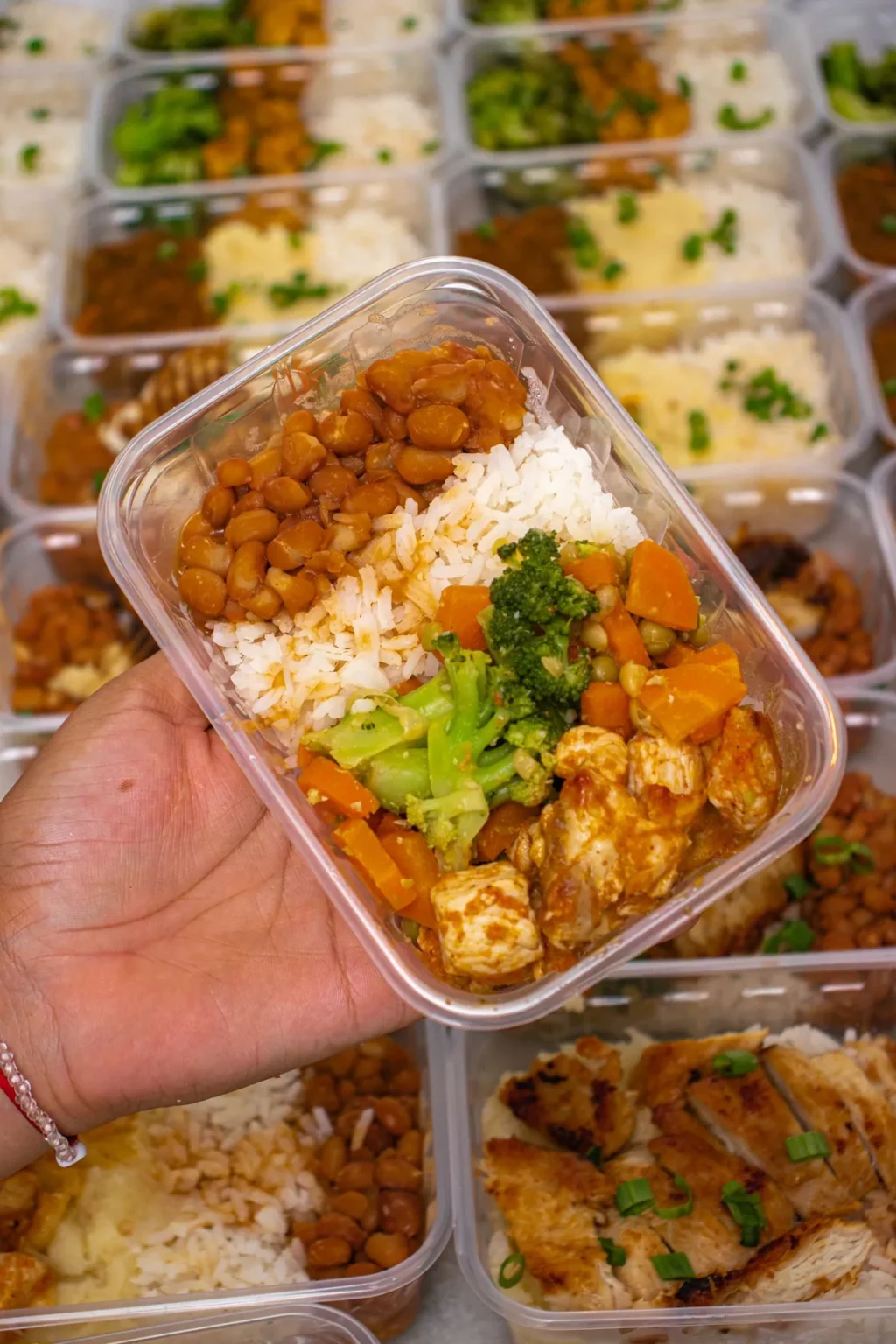
Hour 2: assemble, portion, clean. Let everything cool 10-15 minutes (sealing hot food creates condensation and soggy sadness). Portion into containers: grain on the bottom, protein on top, vegetables on the side. I make 3-4 full-meal containers and keep the rest as mix-and-match components. Wash the pan and pot, wipe the counters, done. Two hours, one modest pile of dishes.
Food Safety: The Rules That Actually Matter
Nobody talks about this in the pretty meal-prep photos, but food safety is the difference between a great habit and a miserable week. Cool cooked food fast and refrigerate within two hours. Eat refrigerated meals within 3-4 days — if you cooked Sunday, Friday’s portion should have been frozen Wednesday. Reheat to steaming hot all the way through (165°F / 74°C), stirring halfway since microwaves have cold spots. Freeze what you won’t eat in time — most cooked meals keep 2-3 months; label with contents and date. Thaw in the fridge overnight, never on the counter.
For the full official guidance, see the federal government’s 4 Steps to Food Safety page — clean, separate, cook, chill.
5 Beginner Formulas (Not Recipes — Better Than Recipes)
Recipes tell you exactly what to make. Formulas let you improvise with whatever you have. The Grain Bowl: grain + protein + roasted veg + sauce (the sauce keeps it from being boring). The Big Salad That Doesn’t Get Sad: hearty greens like kale or cabbage + grain + protein, dressing on the side. The Sheet-Pan Dinner, Doubled: make twice as much of tonight’s dinner; half for now, half portioned for later — zero extra effort. The Soup or Stew Pot: lentil soup, chili, or curry tastes better on day two and is the most forgiving meal-prep food that exists. The Breakfast Box: overnight oats in jars or egg muffins baked in a muffin tin — mornings become grab-and-go.
The Mistakes I Made So You Don’t Have To
Mistake 1: prepping food I didn’t actually like — plain chicken, brown rice, steamed broccoli. By Wednesday I ordered pizza. Now I prep food I genuinely crave. Mistake 2: making too much. Start with 3-4 days, not seven. Mistake 3: dressing salads in advance — soggy lettuce is a crime; dressings go in separate containers. Mistake 4: forgetting about texture — stick to foods that reheat gracefully (stews, grains, roasted veg, braised meats). Mistake 5: no plan for Friday — keep Friday flexible: leftovers, freezer stash, or guilt-free eating out.
Storing, Freezing, and Reheating Without the Sadness
Keep this week’s meals at eye level, front and center in the fridge — line them up Monday to Thursday. What freezes well: soups, stews, chili, curries, cooked grains, shredded meats, breakfast burritos. Flat freezer bags stack like files and thaw faster. What doesn’t: cream-based sauces, raw potatoes, fried foods, fresh salads. Reheating: add a splash of water to rice before microwaving; a skillet beats a microwave for texture; only reheat what you’ll eat.
The Bottom Line
Meal prep for beginners isn’t about becoming a different person — it’s about removing the daily “what am I going to eat” decision so your future self can coast. Start with the 20-minute plan, cook components instead of identical meals, respect the 3-4 day fridge rule, and give yourself permission to keep it imperfect. Try it for two weeks and see how your weeknights feel.
Frequently Asked Questions
How long does meal prepped food last in the fridge?
Three to four days. If you cook on Sunday, plan to eat refrigerated meals by Wednesday or Thursday. Anything you won’t eat within that window should go into the freezer right away — most cooked meals freeze well for 2-3 months.
Can I meal prep without eating the same thing every day?
Absolutely — that’s what ingredient prep is for. Cook components (grains, proteins, roasted vegetables, sauces) instead of complete identical meals, then mix and match through the week for a different bowl every day.
Is meal prep actually cheaper than eating out?
Dramatically. A week of prepped lunches and dinners runs about $60-80 in groceries, versus $150+ on takeout and last-minute grocery runs — you buy ingredients instead of prepared food, waste less, and kill the impulse delivery order.
What containers are best for meal prep?
Ones with lids that actually seal — that’s the whole requirement. Glass lasts longer and reheats better, but good BPA-free plastic works fine to start. Use what you have before buying anything fancy.
Do I need to count calories or follow a diet to meal prep?
No. Meal prep is a cooking method, not a diet. It works for any way of eating — you just cook more of what you’d eat anyway, ahead of time.