How to Keep Fresh Herbs Fresh Longer in the Fridge: My Method That Lasts Two Weeks
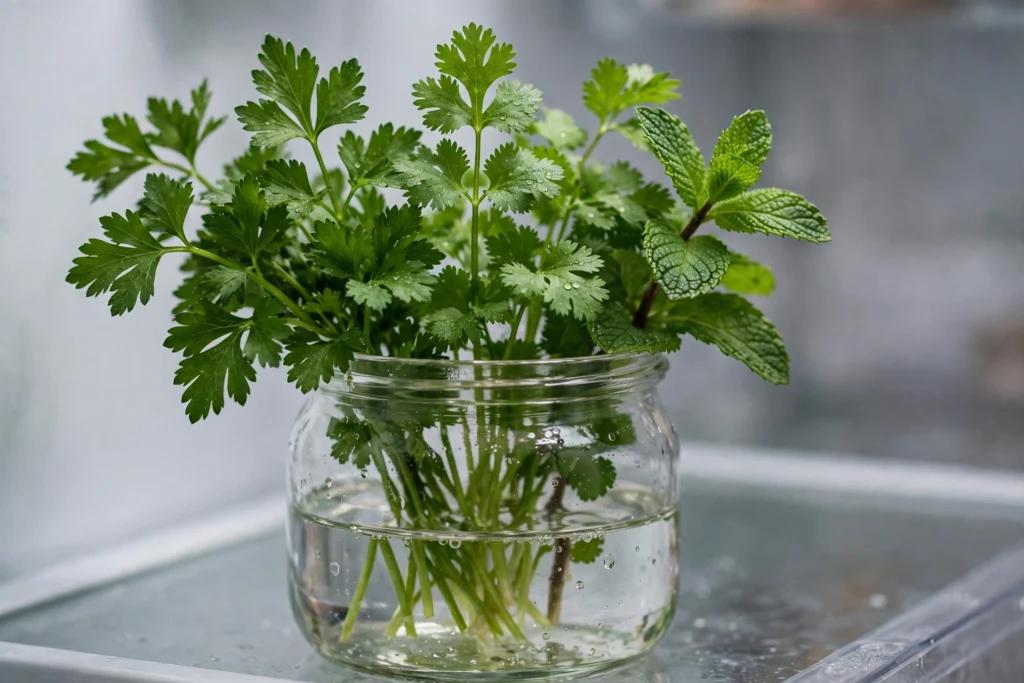
I used to have the same sad ritual every week. I’d buy a beautiful bunch of cilantro or parsley on Saturday with big cooking plans, and by Wednesday it had turned into a slimy, brown mess in the crisper drawer. I’d throw it out feeling guilty about the money and the waste, then buy another bunch the following weekend and repeat the whole cycle. Sound familiar?
It took me an embarrassingly long time to learn that the problem wasn’t the herbs — it was how I was storing them. Once I figured out how to keep fresh herbs fresh longer in the fridge, the same bunch that used to die in three days started lasting me two full weeks. No special gadgets, no expensive produce keepers. Just a jar, some water, and understanding what herbs actually want.
Here’s everything I do now, including the one herb you should never put in the fridge at all.
Table of Contents
Why Your Herbs Turn to Slime in Three Days
To fix the problem, it helps to understand what’s actually killing your herbs. Fresh herbs are living plant tissue, and the moment they’re cut, two things start working against them: moisture loss and bacterial decay. The dry, cold air of a fridge sucks moisture out of the leaves, making them wilt. At the same time, any excess surface moisture — from a sealed plastic bag or a wet produce drawer — becomes a breeding ground for the bacteria that turn everything to slime.
Most of us make it worse without realizing it. Tossing the bunch into the fridge in its store packaging, loose in the crisper drawer, or sealed in a plastic bag creates exactly the wrong conditions: either too dry or too wet, with no air circulation. The herbs don’t stand a chance.
The fix is about balance — giving the stems the water they need while keeping the leaves relatively dry and breathing. Every method below is built around that principle, and it’s why they work so much better than just chucking the bunch in the drawer.
The Jar Method: My Go-To for Soft Herbs
This is the method I use for about 80% of my herbs, and it’s almost magical how well it works. Think of your herbs like a bouquet of fresh flowers — because biologically, that’s essentially what they are.
Here’s exactly what I do. First, I trim about half an inch off the bottom of the stems with a sharp knife or scissors. This reopens the stems’ water-carrying vessels, which get sealed off after cutting. It’s the same reason florists recut flower stems, and it makes a real difference.
Next, I pull off any leaves that would sit below the waterline. Leaves sitting in water rot fast and foul the water, so this step matters. Then I stand the bunch upright in a glass or mason jar with about an inch of cool water — just enough to cover the trimmed stem ends. I loosely tent a plastic produce bag over the top of the leaves (not sealed, just draped) to hold in a little humidity, and the whole jar goes into the fridge.
Every two or three days, I change the water. That’s the entire maintenance routine, and it takes thirty seconds.
Which herbs love this method? The soft-stemmed ones: parsley (both flat-leaf and curly), cilantro, mint, dill, and tarragon. Stored this way, I routinely get 10 to 14 days out of parsley and cilantro, compared to the 2 to 3 days I got from the crisper drawer. The European Food Information Council describes this same approach in their guide to keeping herbs fresh at home, so it’s not just my kitchen superstition — it’s the recommended technique.
One small upgrade I picked up: adding a tiny squeeze of lemon juice to the water keeps it slightly acidic, which slows bacterial growth and keeps the water clear longer. Totally optional, but I do it when I remember.
The Damp Towel Method: Best for Woody Herbs
Woody herbs — rosemary, thyme, sage, oregano, marjoram — play by different rules. Their sturdy stems don’t drink water the way soft herbs do, and too much moisture actually makes them rot faster. For these, the jar method is overkill and can backfire.
My method for woody herbs: lay them in a single layer on a paper towel or clean tea towel that’s damp but not wet. Here’s the test I use — if you can squeeze water out of the towel, it’s too wet. Wring it out until it’s just barely moist. Then roll the towel loosely around the herbs, leaving the ends slightly open for air, and slide the whole roll into a zip-top bag or a container with a lid. Into the fridge it goes, ideally in the crisper drawer.
Stored like this, rosemary and thyme easily last me two to three weeks. Sage is a little more delicate — I get about 10 days — but that’s still triple what I got before. I check the roll every few days; if the towel has dried out, I re-dampen it. If any sprig looks slimy or dark, I pull it out before it affects the rest.
This method also works beautifully for chives and green onions, by the way. And if you’re building a little library of kitchen know-how the way I am, you might like my other food and kitchen guides too.
The Basil Exception (Do Not Refrigerate It)
This is the mistake I see everyone make, and I made it for years: putting basil in the fridge. Basil is the one common herb that hates the cold. It’s a tropical plant, and refrigerator temperatures damage its leaves — they turn black, develop spots, and lose their flavor within a day or two.
Treat basil like cut flowers on your counter instead. Trim the stems, stand the bunch in a jar with an inch of water, and keep it at room temperature away from direct sunlight. Change the water every couple of days. On my kitchen counter, basil lasts a full week this way and keeps producing fragrant leaves I can pick as needed.
If your kitchen runs cold in winter, keep the basil jar in the warmest spot you have — near (not on) the stove is perfect. Just don’t let it sit in a cold draft from a window.
Freezing Herbs: When You Can’t Use Them in Time
Sometimes life happens and you know you won’t get through the bunch in two weeks. That’s when I freeze them, and honestly, frozen herbs are criminally underrated. They’re not good for garnishing — the texture changes — but for cooking, they’re nearly as good as fresh.
My favorite method is the ice cube tray trick. I chop the herbs, pack them into ice cube tray compartments, and cover with olive oil (or water for herbs I’ll use in soups). Once frozen solid, I pop the cubes out into a labeled freezer bag. A cube of frozen cilantro dropped straight into a hot pan is a weeknight dinner lifesaver.
This works best for hearty herbs — rosemary, thyme, sage, oregano — and for chopped parsley and cilantro. It does not work well for basil meant to be eaten raw (frozen basil turns dark), though basil frozen in oil is fine for cooked sauces.
A flat-freeze also works: spread whole sprigs in a single layer on a baking sheet, freeze until solid, then transfer to a freezer bag. This is my go-to for rosemary and thyme sprigs I’ll toss whole into roasts and stews.
One safety note worth knowing: never store herbs packed in oil at room temperature, and in the fridge only for a few days — oil creates an oxygen-free environment where certain bacteria can thrive. Frozen herb-oil cubes are perfectly safe, though.
How to Revive Herbs That Are Already Wilting
Before you throw out that sad bunch, try this. If the herbs are wilted but not slimy or brown — just limp — they’re dehydrated, not dead. Trim the stem ends, stand the bunch in ice water for 15 to 30 minutes, and watch what happens. I’ve seen completely floppy parsley perk back up to near-fresh condition.
This works because the stems can still draw water even when the leaves have lost theirs. It won’t save herbs that have turned to mush or developed that sour smell — those are gone, and no trick will bring them back. But for the merely wilted, the ice bath trick rescues the bunch more often than not.
Mistakes That Kill Herbs Faster
A quick rundown of what not to do, most of which I learned the hard way:
Washing before storing. Wet leaves rot faster. Wash your herbs right before you use them, not when you bring them home — with one exception: if they’re visibly gritty, rinse and then dry them thoroughly in a salad spinner or between paper towels before storing.
Sealing wet herbs in plastic bags. A sealed bag full of moist herbs is a slime factory. If you must use a bag, the herbs should be dry and the bag shouldn’t be airtight — or use the damp-towel-inside-a-bag method described above, which controls the moisture deliberately.
Storing near ethylene-producing fruit. Apples, bananas, and avocados release ethylene gas as they ripen, which speeds up decay in nearby produce — herbs included. Keep your herb jar away from the fruit bowl.
Buying more than you need. This isn’t a storage tip exactly, but it’s the most effective waste reducer I know. If a recipe calls for a tablespoon of thyme, consider whether dried thyme from the spice rack would do. Save the fresh bunches for dishes where they really shine.
Forgetting about them. Even perfectly stored herbs have a lifespan. I do a 30-second herb check every time I open the fridge for something else — pull out anything turning, change the water if it’s cloudy. Small habit, big payoff.
Conclusion
Figuring out how to keep fresh herbs fresh longer in the fridge genuinely changed how I cook. I waste almost nothing now, I always have fresh flavor on hand, and I’ve probably saved a small fortune in herbs I used to throw away. The whole system is just the jar method for soft herbs, the damp towel method for woody ones, basil on the counter, and the freezer as backup.
Start with whichever herb you buy most. Try the method once, and when you’re still snipping fresh leaves ten days later, you’ll wonder why nobody taught you this years ago. I certainly did.
Frequently Asked Questions
How long do fresh herbs last in the fridge?
It depends on the herb and the method. Loose in the crisper drawer, most herbs last 2 to 3 days. With the jar method, soft herbs like parsley and cilantro last 10 to 14 days; with the damp towel method, woody herbs like rosemary and thyme last 2 to 3 weeks. Basil is the exception — it does poorly in the fridge and should stay on the counter.
Should I wash herbs before storing them?
No — wash right before use, not before storing. Wet leaves rot much faster. If your herbs are gritty from the store, rinse them and then dry completely (a salad spinner is ideal) before putting them away.
Why does my basil turn black in the fridge?
Basil is a tropical plant that’s sensitive to cold. Refrigerator temperatures damage its cell walls, causing black spots and rapid flavor loss. Keep basil in a jar of water at room temperature instead, away from direct sunlight, and it will stay fresh for about a week.
Can you freeze fresh herbs?
Yes, and it works well for cooking. Chop herbs and freeze them in ice cube trays covered with olive oil or water, then transfer the cubes to a freezer bag. This is best for rosemary, thyme, sage, oregano, parsley, and cilantro. Don’t freeze herbs you plan to use raw as garnish — the texture changes.
How do you keep cilantro fresh for two weeks?
Trim the stems, remove lower leaves, stand the bunch in a jar with an inch of water, loosely cover with a plastic bag, refrigerate, and change the water every two to three days. This jar method consistently keeps cilantro fresh for 10 to 14 days in my experience.