How to Pack for a Winter Trip: The List That Kept Me Warm (and Under the Weight Limit)
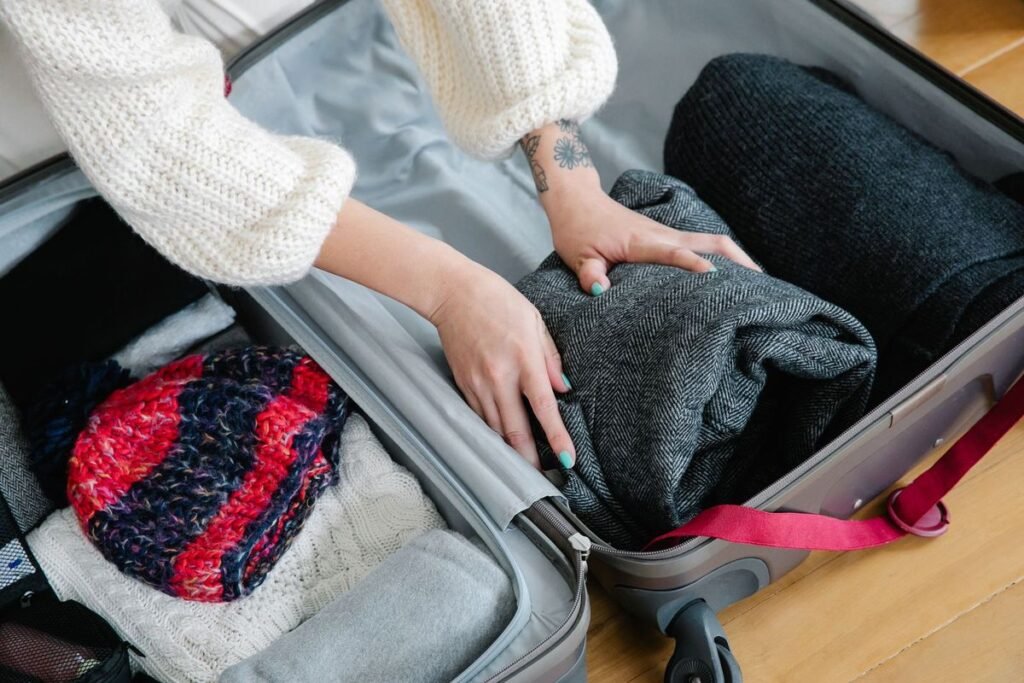
The first winter trip I ever packed for was a disaster in slow motion. I threw in my thickest jumper, then another thick jumper just in case, then a coat so heavy it nearly counted as hand luggage on its own. By the time I added boots, a scarf, gloves, and “a few spares,” my suitcase would not close, my bag was over the weight limit at check-in, and I still spent the whole trip cold — because I had packed bulk, not warmth.
How to pack for a winter trip is not really about taking more clothes. It is about taking the right layers, in the right order, and leaving the heavy, rarely-worn stuff at home. Once I learned that, winter packing got dramatically easier. On my last cold-weather trip I travelled with one medium suitcase, stayed warm in minus temperatures, and never once wished I had brought the extra jumper I left behind. This is the system I use now. It works whether you are heading for a snowy city break, a mountain cabin, or a week visiting family somewhere properly cold. No special gear, no expensive gadgets — just a smarter list.
Table of Contents
Start With Layers, Not Bulk
The single biggest change I made was switching from thick clothes to layers. One heavy wool jumper traps some warmth but leaves you with no way to adjust when you step from a freezing street into a heated shop. Three thinner layers — a base layer, a mid layer, and an outer layer — give you control, and they pack flatter too.
My base layer is a thermal top and thermal leggings. They weigh almost nothing, they take up barely any space, and they do more for warmth than any single chunky sweater I own. If you buy only one thing for a winter trip, make it a decent thermal base layer. Merino wool is wonderful if your budget stretches to it, but synthetic thermals work well too, and they dry faster if you need to wash them in a sink. The mid layer is where your insulation lives: a fleece, a thin down jacket, or a warm jumper. The outer layer is your coat, and it should be windproof and water-resistant at minimum. A coat that keeps wind out matters more than a coat that is simply thick, because wind chill is what makes a cold day feel brutal.
Choose One Coat and Commit to It
Coats are the hardest part of winter packing because they are so bulky. The temptation is to bring two — a smart one and a casual one — but that is usually where the suitcase explodes. I now pick one coat and plan every outfit around it. The right coat depends on your trip. For a city break, a knee-length waterproof coat with a hood is my default: it looks decent, it covers your layers, and the hood saves you when the weather turns. For somewhere properly snowy, I want something longer, warmer, and with a proper insulated lining, even if it is less stylish.
Either way, I wear the coat onto the plane rather than packing it. That alone frees up a shocking amount of suitcase space, and you are warm the moment you step off the plane. Before you pack, check the forecast properly — not just the daytime high, but the evening low, the wind, and whether rain or snow is expected. A coat that is perfect for dry cold can be miserable in wet cold, and that one check decides whether you need waterproofing or just insulation.
Boots: Wear Them, Don’t Pack Them
Winter boots are the second suitcase-killer after coats. They are heavy, awkwardly shaped, and they swallow space. My rule is simple: wear your bulkiest footwear on travel day, and pack at most one extra pair of shoes. For most winter trips, one pair of warm, waterproof boots with good grip covers everything — walking snowy streets, slushy pavements, and icy steps. I look for boots I can walk in all day without blisters, because a beautiful pair of boots that hurts after an hour will ruin a trip faster than cold weather will.
If you need something smarter for an evening out, pack flat, light shoes that squash into a corner of the case, not a second pair of boots. A small practical tip: stuff socks, gloves, or chargers inside your packed shoes. It uses dead space and keeps the shoes from getting crushed. And if your boots get wet on the trip, stuff them with newspaper overnight — it draws out moisture far better than leaving them by a radiator, which can damage leather and glue.
The Packing Method That Actually Saves Space
You do not need to become a packing evangelist, but two techniques genuinely help with winter clothes. The first is rolling soft items like thermals, T-shirts, and knitwear instead of folding them. Rolled clothes fill the gaps around bulkier items and wrinkle less than you would expect.
The second is packing cubes or even simple zip bags to separate layers: base layers in one, mid layers in another, accessories in a third. When you arrive somewhere cold and tired, being able to pull out exactly the layer you need, instead of unpacking everything, is a small mercy. For bulky jumpers, I use the bundle method in reverse: lay the biggest item flat at the bottom of the case, then build everything else on top, and fold the edges over at the end. It sounds fussy, but it stops jumpers from puffing up and eating the whole case.
And I always leave a little empty space — not for souvenirs, though those are welcome, but because a case packed to bursting is impossible to repack at the end of the trip. A quick word on how many outfits you actually need: for a week-long trip, I plan four or five outfits and re-wear mid layers and coats across all of them. Nobody notices you wore the same fleece three days running when the coat on top is the same anyway. That is the quiet secret of winter travel: layers repeat, outfits do not need to.
Accessories: Small Items, Huge Difference
If layers are the engine of winter warmth, accessories are the finishing touches that make the whole system work. A warm hat, a scarf, and gloves do more per gram than almost anything else you pack, because you lose a lot of heat from your head, neck, and hands. I pack a hat that covers my ears, a scarf long enough to wrap twice, and gloves that actually let me use my phone — fumbling with bare hands in freezing wind to take a photo is miserable, and touch-screen gloves have genuinely improved over the years. Hand warmers are worth throwing in too, especially if you will be outdoors for hours; the disposable ones are cheap and light, and the reusable gel ones are a nice reusable option.
One more accessory I never skip: lip balm and moisturiser. Cold air and indoor heating dry skin out fast, and a small tube of each takes up no space at all. The same goes for sunscreen, oddly enough — winter sun on snow is surprisingly strong, and I have come home sunburnt from a snowy trip before.
Toiletries and Liquids Without the Hassle
Winter trips tempt you to over-pack toiletries, because cold weather makes you want every cream and balm you own. Resist it. Decant into small travel bottles, keep everything in one clear bag, and remember the rules for liquids in hand luggage if you are flying with a cabin bag only. Checking the official list of what you can bring before you pack saves an awkward moment at security, and it is worth a quick look even if you have flown many times, because rules and restrictions do change.
My winter toiletries kit is short: moisturiser, lip balm, sunscreen, a small hand cream, and my usual basics. Anything else I can buy at my destination if I truly need it. Hotels and pharmacies exist everywhere, and buying one forgotten item is cheaper and lighter than carrying a full bathroom cabinet “just in case.”
Electronics in the Cold: What I Learned the Hard Way
Cold weather is hard on electronics, and I learned this the embarrassing way when my phone battery dropped from 40 percent to dead in about ten minutes on a freezing walk. Batteries drain faster in the cold, so I now keep my phone in an inside pocket, close to my body, rather than in a coat pocket or a bag. A small power bank, also kept warm, is a lifesaver on long cold days.
If you are bringing a camera, keep it in your bag when you are not using it, and let it warm up gradually when you come indoors — going straight from freezing air to a steamy room can fog lenses. And pack chargers and cables in your day bag, not buried in your suitcase, so you are not digging through layers at the airport.
Carry-On or Checked Bag? My Honest Answer
For a short winter city break of three or four days, a carry-on is genuinely doable if you wear your coat and boots and pack in layers — my earlier carry-on packing list shows how I approach a cabin bag in general. For a week or longer, or for somewhere with serious snow, I take a checked bag and stop fighting it. Forcing a week’s worth of winter clothes into a cabin bag usually means leaving out the very layers that keep you warm, which defeats the point.
Whichever you choose, keep the essentials in your personal item or hand luggage: medication, phone charger, a change of base layer, your scarf and gloves, and anything you would be miserable without if your checked bag is delayed. Winter delays are common, and arriving somewhere freezing without a warm layer because it is in a delayed suitcase is a miserable start to a trip.
My Winter Packing Checklist
Here is the list I run through before I zip the case. Adapt it to your trip, but if you can tick all of these, you are in good shape: Thermal base layer top and leggings (two sets for a week); Mid layers: fleece or thin down jacket, plus two jumpers; One warm, windproof, water-resistant coat (worn on travel day); Waterproof winter boots with grip (worn on travel day), plus one light pair of shoes; Warm hat, scarf, and touch-screen gloves; Warm socks — wool or thermal, not thin cotton; Hand warmers, lip balm, moisturiser, sunscreen; Toiletries in travel sizes, in a clear bag; Phone, charger, and a power bank; Day bag or small backpack for outings; Travel documents, medication, and a book or entertainment for the journey.
Notice what is not on the list: a second coat, a second pair of boots, five “just in case” jumpers, and a full set of outfits for every single day. Leaving those behind is not sacrifice. It is the whole trick.
Common Winter Packing Mistakes to Avoid
The mistakes I see most often — and have made myself — are predictable. First, packing cotton as a base layer. Cotton holds moisture, and wet cotton in cold weather chills you fast. Synthetics or wool are better. Second, bringing new shoes on a winter trip. Break shoes in at home, not on icy pavements. Third, forgetting that indoor heating is real: you will spend a lot of time indoors, in warm rooms, so your base and mid layers need to be comfortable on their own, not only under a coat.
Fourth, over-packing “just in case” clothes for weather that is not forecast. Check the actual forecast for your actual destination, not a vague idea of “winter.” And fifth, forgetting gloves, a hat, or a scarf entirely — the small items are the ones people leave behind, and they are the ones that make the biggest difference to comfort.
Conclusion
How to pack for a winter trip comes down to one idea: pack layers, not bulk. A thermal base, a warm mid layer, one good coat, and waterproof boots you wear on the journey will keep you warmer than a suitcase full of thick jumpers ever will. Add the small accessories — hat, scarf, gloves, lip balm — keep your electronics warm, and leave the second coat and the “just in case” extras at home.
I still remember that first disastrous winter suitcase, the one that would not close. I also remember the relief of my last winter trip, walking off the plane warm, dry, and comfortably under the weight limit, with a case I could actually repack at the end. That difference was not money or fancy gear. It was a list, a bit of discipline, and learning to trust layers. Pack light, layer well, and enjoy the cold — it is much more fun when you are warm.
How many layers should I wear on a winter trip?
Three layers are the classic system: a moisture-wicking base layer, an insulating mid layer, and a windproof, water-resistant outer layer. You can add or remove the mid layer as temperatures and indoor heating change.
What is the warmest way to pack for a winter trip without overpacking?
Pack thin, warm layers instead of thick, bulky clothes. Thermal base layers, a fleece or thin down jacket, and one good coat give more warmth per kilogram than several heavy jumpers, and they leave room in your suitcase.
Should I wear my winter coat and boots on the plane?
Yes, whenever possible. Wearing your bulkiest coat and boots on travel day frees up a large amount of suitcase space and weight, and means you are warm as soon as you arrive, even if your luggage is delayed.
How many outfits do I need for a week-long winter trip?
Four or five outfits are usually enough for a week, because coats and mid layers can be re-worn across days. Plan outfits around one coat and a few interchangeable base and mid layers rather than a new outfit for every day.
Are packing cubes worth it for winter clothes?
Yes, especially for separating layers. Packing cubes keep base layers, mid layers, and accessories organised, make it easier to find what you need without unpacking everything, and help bulky winter clothes compress a little better.
What should I keep in hand luggage on a winter trip?
Keep medication, a phone charger and power bank, a change of base layer, your scarf, hat and gloves, and travel documents in hand luggage. That way a delayed checked bag does not leave you cold and stuck on arrival.