Balenciaga Trash Bag: Why This Luxury Design Went Viral
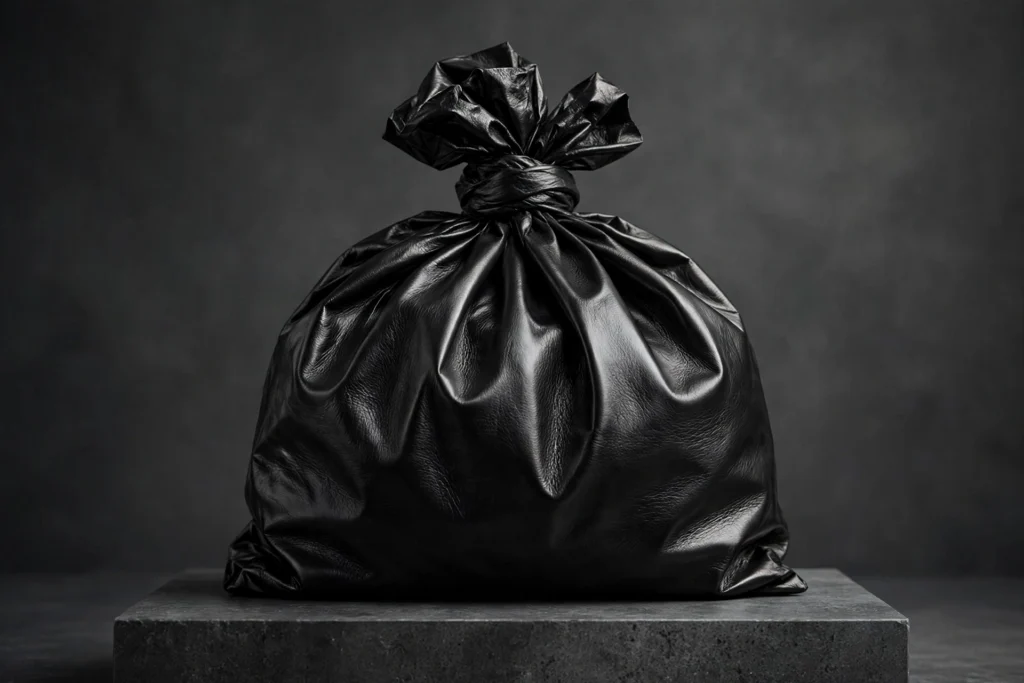
The balenciaga trash bag is a real luxury fashion accessory, and it is exactly what it sounds like: a designer bag inspired by the ordinary garbage bags most of us use every day. When Balenciaga introduced this unusual creation, people immediately started asking the same question: why would anyone pay thousands of dollars for something that looks like a plastic bag?
Table of Contents
Honestly, I understand the reaction. Most handbag designs try to look elegant, polished, or expensive. This one seems to do the opposite. Its loose shape, crinkled appearance, and gathered drawstring closure make it look remarkably similar to a household rubbish bag.
But that is precisely what makes it interesting.
The Balenciaga Trash Pouch, as the brand calls it, is not an ordinary plastic bag with a luxury label attached. It was created as a leather fashion accessory and became one of those fashion moments that people could not stop discussing. Some saw it as a clever design experiment, while others thought the entire idea was ridiculous.
I think the most interesting part is that both reactions make sense. The bag challenges what people expect from luxury fashion, especially when its appearance is so familiar and its reported price is so high.
Let’s look at what the Balenciaga trash bag actually is, how much it cost, what it is made of, why it became controversial, and whether it makes sense as a fashion purchase.
What Is the Balenciaga Trash Bag, Exactly?
The Balenciaga trash bag is a luxury pouch designed to resemble a household garbage bag. Its official name is the Trash Pouch, and it was introduced as part of Balenciaga’s 2022 collection under the creative direction of Demna.
Unlike a conventional handbag, which often has a structured body, decorative hardware, and carefully defined proportions, this design deliberately looks soft, wrinkled, and loosely gathered.
At first glance, the resemblance is difficult to miss. The pouch has an irregular silhouette, a shiny surface, and a gathered opening that recalls the way people tie up a rubbish bag before putting it outside.
The difference becomes clearer when you look beyond its unusual shape. This was designed as a luxury leather accessory, not an actual disposable bag.
Balenciaga’s official Winter 22 collection archive identifies the Trash Pouch as an accessory inspired by a garbage bag. That detail matters because it confirms the resemblance was intentional rather than an accidental comparison made by people online.
The original release received particular attention for its black, blue, and white versions, although available colors and product listings can vary across collections and markets.
What fascinates me about the design is its familiarity. You do not need to understand fashion history, recognize a particular designer, or follow runway trends to understand what the bag resembles. Almost everyone has seen a garbage bag, so the comparison happens immediately.
That instant recognition helps explain why the design became such an effective conversation starter.
There is also a difference between calling something a trash bag and understanding the designer’s approach. Balenciaga took a recognizable everyday shape and recreated it as a luxury object. Whether someone finds that creative or absurd depends largely on what they believe fashion should accomplish.
Personally, I would not call it an everyday essential. It is much closer to a statement accessory: something intended to attract attention, challenge expectations, and encourage people to talk about fashion in a different way.
That distinction helps make sense of its popularity. People were not simply responding to another handbag. They were responding to the surprising idea behind it.
How Much Does It Cost — and Why So Much?
The price is probably the first thing most people want to know about the Balenciaga trash bag.
Two historical figures appear in published fashion coverage. The luxury accessory was widely reported at $1,790 when it was introduced in 2022. A March 2026 Vogue retrospective describes the pouches as retailing for $2,100.
Those reports differ, and the available reporting does not establish exactly why. It is therefore more accurate to treat them as published historical prices rather than assume either figure is the current price of a bag available to purchase today.
Either way, the amount is striking for a design inspired by something that ordinarily costs very little.
So, what is a buyer paying for?
First, there is the material. Fashion coverage described the original Trash Pouch as a leather accessory, rather than a disposable plastic bag. Leather, manufacturing, construction, and finishing all contribute to the cost of a luxury handbag.
Second, there is the brand itself. Balenciaga is an established luxury fashion house with its own design identity, retail network, and position in the high-end market. Luxury prices are not calculated solely by adding up the raw materials and labor.
Third, there is the design concept. The unusual silhouette is a major part of the product’s appeal. Some buyers are interested precisely because it does not resemble a traditional luxury bag.
Finally, there is the cultural attention surrounding the item. A recognizable design that sparks debate can become a memorable fashion object, attracting collectors and people interested in unconventional designer pieces.
However, I would be careful about assuming that a high price automatically means better quality, superior usefulness, or long-term investment potential. Those are separate questions.
A leather bag can involve skilled production and still have a design that does not suit everyone’s needs. Likewise, a controversial product can be commercially interesting without being a sensible purchase for every fashion enthusiast.
The important distinction is between understanding why a luxury brand charges a particular price and deciding whether you personally receive enough value in return.
For someone who collects unusual runway accessories, the concept itself might justify the expense. For someone who wants a dependable handbag for everyday errands, the same price could be difficult to defend.
That is why the conversation about the Balenciaga trash bag is bigger than its price tag. It raises a familiar luxury-fashion question: are people paying mainly for materials, functionality, design, brand recognition, or the experience of owning something unusual?
The honest answer is that the balance differs from person to person.
Why Does a Luxury Bag Look Like a Trash Bag?
This is where the Balenciaga trash bag becomes more interesting than its appearance alone suggests.
Traditional luxury handbags tend to communicate value through recognizable visual signals. Think carefully finished leather, distinctive hardware, elegant proportions, decorative stitching, or a logo that identifies the designer.
The Trash Pouch takes a different route. Its shape resembles an inexpensive household item, and its deliberately casual appearance seems almost disconnected from the idea of luxury.
That contrast is the point.
Designers sometimes use familiar objects as inspiration because changing their context makes people look at them differently. An ordinary shopping bag becomes surprising when recreated as a designer accessory. A familiar silhouette can suddenly feel unusual when made from unexpected materials or presented in an expensive setting.
Balenciaga has explored similar ideas in the past. Its oversized blue shopping-bag design, for example, attracted attention because people immediately connected it to the everyday shopping bags used by a well-known furniture retailer.
The Trash Pouch follows a comparable approach. It takes something familiar, changes its material and context, and places it within luxury fashion.
I think this is a clever way to generate a reaction, even if the result is not something I would personally choose to carry.
The design also challenges the assumption that expensive fashion must always look beautiful in a conventional sense. Here, the intended visual effect comes from awkwardness, irregularity, and an almost uncomfortable resemblance to an object that has no traditional fashion appeal.
That makes it an example of unconventional or deliberately provocative design.
There is another reason the concept works so well online: the visual joke needs very little explanation. Someone can look at the bag for two seconds and understand the comparison. That makes it easy to photograph, discuss, criticize, and turn into a social media post.
Still, I would avoid assuming the design has one definitive philosophical meaning. It is reasonable to interpret the bag as commentary on luxury, consumption, and our willingness to pay for designer branding, but that does not mean every buyer or observer will read it the same way.
Sometimes the appeal is simply that an object looks unexpected.
And perhaps that is enough to make the design memorable. A conventional handbag might be admired for its beauty, while the Trash Pouch is remembered because people cannot agree on whether it is brilliant or ridiculous.
In fashion, creating that kind of response can be powerful. It makes people look twice, even when they have no intention of purchasing the product.
What Is It Actually Made Of?
Despite its name and appearance, the Balenciaga trash bag is not simply a plastic garbage bag sold at a designer price.
The original Trash Pouch was described in contemporary fashion coverage as a calfskin leather accessory. Its surface and loose silhouette were designed to evoke the look of a conventional trash bag, but the material is what separates the luxury product from its everyday inspiration.
That distinction is important because photographs can be misleading. The glossy, crinkled exterior may resemble thin plastic, but the accessory was intended to function as a fashion pouch rather than disposable packaging.
The leather construction helps explain how the designer could reproduce the familiar shape while offering a product meant to be kept and carried.
The gathered opening is another important design element. Rather than relying on the rigid frame found in many traditional handbags, the Trash Pouch uses a bag-like silhouette and drawstring-style closure to reinforce the resemblance to its inspiration.
The original color options also helped make the reference immediately recognizable. Black and blue versions used contrasting dark ties, while the white version was reported with a red tie.
It is worth being precise about what can and cannot be confirmed from available historical information. Product materials, interior construction, and specifications can vary between models, and the exact original retail page is not consistently available as a current listing. I would therefore avoid assuming that every version has identical lining, hardware, or construction details without checking its own product documentation.
The material also does not settle the question of quality by itself.
Calfskin is a leather type used in luxury accessories, but durability depends on more than the name of the material. Finish, construction, stitching, storage conditions, maintenance, and how frequently the item is used all matter.
The shiny surface may also require more careful treatment than someone would expect from the bag’s casual appearance. An item that looks deliberately crumpled is not necessarily designed to be treated roughly.
That is one of the amusing contradictions of this accessory. It looks like something people would normally throw away without a second thought, yet a genuine leather version is precisely the sort of item its owner would need to care for.
In other words, its appearance is casual, but its intended role is not.
If you are researching an original piece today, the sensible approach is to verify the product name, material description, condition, and authenticity rather than relying on a photograph alone.
The trash-bag shape may be easy to imitate, but the appearance does not prove that a particular item is an authentic Balenciaga product.
How the Internet Reacted to It
When the Balenciaga trash bag appeared in fashion coverage in 2022, the reaction was exactly the sort of response the unusual design could be expected to provoke.
People joked about the price, compared the pouch with ordinary bin liners, and questioned whether luxury fashion had gone too far. Others appreciated the creativity behind the concept or admired Balenciaga’s willingness to challenge conventional handbag design.
I can understand both sides.
The criticism is straightforward. When people see a product that resembles an inexpensive household item, they naturally compare its price with the price of that everyday object. The difference seems almost impossible to justify if the bag is judged purely by its shape.
A plastic garbage bag is disposable and practical. A luxury leather pouch is designed to be kept and carried. They look similar, but they serve different purposes and belong to completely different markets.
Of course, the comparison is still part of the fun. The closer the product looks to something inexpensive, the more surprising its reported price becomes.
The positive reaction tends to focus on the idea instead of the resemblance alone. Supporters see the design as an example of conceptual fashion: an object that makes people question why certain materials, shapes, and brands are considered valuable.
And there is no denying that the product created a recognizable fashion moment. People who had never heard the name Trash Pouch could understand the reference immediately.
That accessibility matters on social media. A complicated runway collection may require photographs, background information, or an explanation of a designer’s wider concept. The Balenciaga trash bag needs almost none of that.
One image is usually enough to start a discussion.
The product has also remained relevant in fashion conversations because its central idea is easy to revisit. Whenever an unusual accessory, deliberately distressed garment, or everyday-looking designer item appears online, people can compare it with earlier examples of provocative luxury design.
Vogue revisited the trash-bag phenomenon in March 2026, illustrating how the original accessory continued to come up in conversations about fashion and ordinary objects.
I would not interpret that ongoing attention as proof that everyone loved the bag or that it became a universal fashion success. Viral attention can include praise, criticism, amusement, and outright disbelief.
It does show that the design was memorable enough to remain a reference point.
And, to me, that is the most revealing part of the internet reaction. The bag became interesting not because everyone wanted to own it, but because almost everyone could form an opinion about it.
Who Is Actually Buying This Bag?
It is tempting to imagine a very specific buyer for the Balenciaga trash bag, but I would be cautious about making assumptions about who actually purchased it or how many people bought one.
Without reliable sales and customer data, there is no reason to claim that it appealed exclusively to wealthy collectors, celebrities, influencers, or any particular age group.
Still, it is possible to understand the different reasons someone might be interested in a design like this.
The first potential buyer is the fashion collector. Collectors often pay attention to items that represent a distinctive moment in a designer’s work. For this audience, the appeal may be less about having another practical bag and more about owning an object associated with an unusual collection.
Another possible buyer is someone who enjoys experimental fashion. Not everyone wants accessories that look traditional or quietly luxurious. Some people prefer pieces that feel strange, humorous, exaggerated, or deliberately challenging.
For them, the trash-bag resemblance may be the strongest selling point rather than a disadvantage.
There are also people who like the way controversial fashion communicates personality. Carrying an unusual accessory can become a conversation starter, particularly when the design is recognizable and people are likely to ask questions about it.
Then there is the brand-conscious customer. Luxury labels have audiences who value the designer’s identity, styling, history, and overall aesthetic. The object’s ordinary inspiration does not necessarily remove those associations.
However, I would separate genuine interest in the design from the idea of buying something simply because it attracts attention.
A viral product can look exciting online but feel less appealing when you imagine carrying it regularly. It is easy to enjoy a striking photograph without wanting the item in your own wardrobe.
This is especially important for an accessory with such a distinctive appearance. A conventional black handbag can work with many outfits, whereas a bag designed to look like a garbage sack makes a much stronger visual statement.
Some people will enjoy that limitation because it makes the piece unusual. Others will find it restrictive.
My view is that the most plausible buyer is someone who understands what the bag represents and genuinely enjoys that kind of fashion experimentation. Anyone considering it purely because it became a viral topic should take a little time to decide whether the interest will last.
A product being famous does not automatically mean it belongs in your wardrobe.
Is the Balenciaga Trash Bag Worth It?
Whether the Balenciaga trash bag is worth buying depends on what you expect from a luxury accessory.
If your priority is a practical handbag that coordinates with most outfits, carries everyday essentials comfortably, and offers a timeless appearance, this probably would not be my first recommendation.
Its unusual shape is precisely what makes it memorable, but that same feature limits its versatility. It is a statement piece rather than a subtle everyday option.
The price also deserves careful consideration. Historical reporting places its retail price in the region of $1,790 to $2,100, depending on the source. That is a substantial amount to spend on an accessory whose appeal depends heavily on a particular design idea.
On the other hand, judging a fashion item solely by practicality can miss the point.
People buy art, collectible objects, unusual clothing, and designer accessories for reasons that go beyond their basic function. Personal enjoyment, artistic interest, craftsmanship, and the desire to own something distinctive can all be valid parts of a purchasing decision.
If the Trash Pouch represents a memorable moment in fashion for you, its design might hold a value that cannot be measured by storage space alone.
I would still avoid treating it as a guaranteed investment. Fashion popularity changes, and there is no assurance that an unusual designer bag will appreciate in value or sell quickly in the future. A resale price is not the same thing as a guaranteed return.
Availability also matters. The original accessory belongs to a past collection, and I could not verify an active listing for the exact original Trash Pouch on Balenciaga’s current official website. That does not prove that every example is unavailable, but it means buyers should check current product information rather than assume the original is still being sold directly by the brand.
If you are looking at a secondhand example, verify its authenticity, condition, seller reputation, and return policy before spending money.
My personal verdict is that the Balenciaga trash bag is more compelling as a fashion idea than as a universally practical purchase.
I appreciate the confidence behind a designer turning such an ordinary shape into an object people debate years later. I also think it is perfectly reasonable to admire the concept without buying it.
Ultimately, the best question is not whether everyone should find the bag worth its price. It is whether the particular design, construction, and experience justify that expense to the person paying for it.
For some fashion collectors, the answer may be yes. For many people who simply need a good handbag, it will probably be no.
How to Style It (and Carry It Without Looking Silly)
A bag this unusual needs a little thought when it comes to styling. Since the Balenciaga trash bag already attracts attention, the easiest approach is to let it be the main feature of an outfit rather than competing with several other statement pieces.
Start with simple clothing.
A plain T-shirt, straight-leg jeans, clean trousers, or an uncomplicated jacket can provide a calm background for the bag. You do not need an elaborate outfit to make an experimental accessory stand out.
The idea is to create contrast between the casual appearance of the bag and the rest of the look. When everything else is relatively understated, the accessory feels intentional instead of random.
Try a monochrome outfit.
Black clothing with a black Trash Pouch creates a coordinated look without making the bag feel traditional. White, grey, and neutral shades can also work, depending on the version and the outfit’s overall proportions.
A tonal outfit is especially useful when you want the bag’s texture and unusual silhouette to attract attention without introducing too many competing colors.
Balance the proportions.
Because the Trash Pouch has a loose, irregular shape, it can work well with structured clothing. A tailored coat, neat trousers, or a simple blazer introduces a contrast between polished garments and the relaxed appearance of the bag.
Alternatively, casual streetwear can reinforce its everyday-object inspiration. The important thing is to decide whether you want the contrast to feel polished or deliberately relaxed.
Keep accessories under control.
You probably do not need oversized jewelry, a heavily patterned jacket, striking shoes, and another statement bag all in the same outfit. The Trash Pouch already has a strong identity.
That does not mean you must dress conservatively. It simply means that every part of an outfit should have a reason for being there.
Think about where you are going.
An experimental fashion accessory may work well for a fashion event, creative gathering, or casual outing. For a formal occasion, professional setting, or situation where you need a highly functional bag, a more conventional option might be more suitable.
There is also a practical side to carrying it. Check the actual dimensions, closure, carrying options, and capacity of the specific version before expecting it to replace your regular handbag. Appearance alone does not tell you how comfortably it will carry your belongings.
Most importantly, do not style it solely to prove that you can make an unusual bag look good. Wear it only if you enjoy the design.
There is no need to take the product too seriously. Fashion can be expressive, humorous, and experimental. If an accessory makes an outfit feel more personal and you enjoy wearing it, that matters more than whether everyone else immediately understands the idea.
Conclusion
The Balenciaga trash bag is one of those fashion accessories that makes more sense when you look beyond its first impression.
Introduced in 2022 as the Trash Pouch, it turned an everyday garbage-bag shape into a luxury leather accessory. Its unconventional appearance, reported price, and instantly recognizable design helped it attract attention far beyond the usual audience for designer handbags.
Some people see the bag as a clever challenge to traditional ideas of luxury. Others see an expensive product that would be difficult to justify when judged by practicality alone. I think there is room to understand both perspectives without pretending everyone needs to agree.
Personally, I find the concept more interesting than the idea of purchasing the bag itself. It demonstrates how fashion can change the meaning of a familiar object simply by changing its materials, context, and presentation.
Is it worth buying? That depends on your budget, your interest in experimental design, and how often you would genuinely use it.
You can appreciate the creativity without spending thousands of dollars, and you can criticize the price without dismissing the design entirely. Either way, the Balenciaga trash bag has achieved something that many fashion products never do: it has made people stop, look twice, and start a conversation.
Frequently Asked Questions
What is the Balenciaga trash bag made of?
The original Balenciaga Trash Pouch was described in fashion coverage as being made from calfskin leather, despite its resemblance to a plastic garbage bag. Check the specifications of the individual version for any differences in materials or construction.
How much is the Balenciaga trash bag?
The original accessory was reported at $1,790 in 2022, while Vogue’s March 2026 retrospective cited $2,100. These are published historical retail figures, not a verified current selling price, and the reason for the difference is unclear.
Why did Balenciaga make a bag that looks like a trash bag?
Balenciaga deliberately recreated the familiar garbage-bag shape as a luxury accessory, challenging conventional ideas about how expensive fashion should look. The resulting contrast between an everyday object and luxury design helped make the product a major conversation starter.
Is the Balenciaga trash bag still available?
I could not verify an active listing for the original Trash Pouch on Balenciaga’s current official website. Availability may vary through boutiques or the resale market, so check current listings and verify authenticity before purchasing.
Is the Balenciaga trash bag worth buying?
It may appeal to collectors and people who genuinely enjoy unconventional designer fashion. For someone looking for a versatile, practical everyday handbag, the high historical retail price and distinctive design may make it difficult to justify.